

SCALE project kick-off! A Major Step Forward for Smart Mobility in Europe

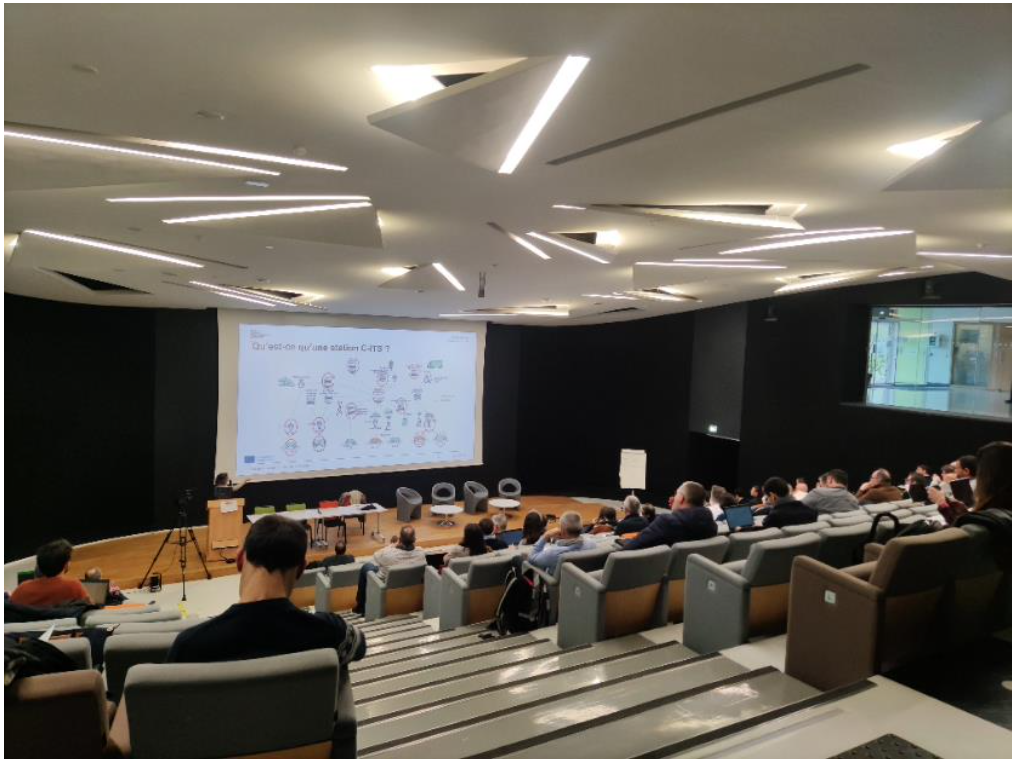
On September 1, 2024, the Europe-wide project known as SCALE (Strengthening C-ITS Adoption and Alignment across Europe) officially launched with the support of 84 partners and a total budget of €77 million, 50% of which is funded by the European Commission.
What is its goal?
The project aims to remove the remaining barriers to the large-scale deployment of C-ITS (cooperative intelligent transport systems) and delivers real added value by addressing national challenges while accelerating their implementation and expanding their adoption to other European countries and local authorities. Its goal is also to test new use cases (services) on a large scale at 10 pilot and operational sites across Europe.
What are C-ITS?
C-ITS (Cooperative Intelligent Transport Systems) are characterized by the exchange of data between different components of transport systems – for example, between vehicles and infrastructure – regardless of the mode of transport: cars, trucks, buses, trams, bicycles, or even pedestrians. This communication applies to roads, train stations, ports, park-and-ride facilities (P+R), and other transportation infrastructure. Thanks to C-ITS, vehicles and infrastructure can exchange information to optimize traffic flow, improve safety, and offer new services to users. Communication between these entities can occur over long or short ranges via a direct connection.
Who are the stakeholders in the SCALE project?
The SCALE project brings together a wide range of partners at the European level from various sectors. This diversity of profiles is a major asset for the project. It fosters a collaborative approach and enriches discussions on the deployment of C-ITS services. Among the 84 participants from France, Italy, Spain, Austria, and Hungary, several categories stand out:
- Road and highway network operators
- Automotive manufacturers and equipment suppliers
- Local and regional authorities (metropolitan areas, departmental councils, regional councils, local governments, etc.)
- Ministries of Transportation and the Interior
- Telecommunications companies and service providers
- Universities and research organizations
The SCALE project buils on previous initiatives, aimed to develop use cases in urban and logistics environments and for automated vehicles, while promoting the harmonization and growth of C-ITS at the European level. From 2024 to 2028, SCALE focuses on overcoming the remaining technological, industrial, and economic barriers, while facilitating the deployment of intelligent transportation systems integrated into control vehicles.
How does it work?
- Short-range (real-time message communication): via roadside units installed along infrastructure.
- Long-range (centralized message communication): via a central station (server) that collects and redistributes information.
- In vehicles: via an integrated onboard unit.
- Without specific equipment: a simple smartphone app like Coopits also provides access to C-ITS services.

To achieve this, SCALE is implementing tailored incentives to facilitate the transition to a new generation of smart mobility services.
SCALE aims to address the remaining challenges that are hindering the industrialization of C- ITS in France and, more broadly, in Europe. By tackling these challenges, the project contributes to large-scale operational deployment, thereby aiming to strengthen European leadership in this strategic field.
The first challenge lies in the technological dimension: there is a wide variety of technologies and architectures which, although they are both complementary and competitive, create considerable uncertainty regarding investment. The project aims to overcome this challenge by conducting an in-depth assessment of each use case, with the goal of selecting the technologies and architectures best suited to meet the specific needs of stakeholders and end users.
The second challenge, of an operational nature, stems from the complexity of large- scale deployments, particularly given that uncertainty remains high. In this context, the SCALE project focuses on optimizing deployment, compliance, and operational robustness processes by developing sites dedicated to compliance, deployment, and the implementation of large-scale solutions.
The third challenge is socio-economic in nature: in collaboration with automakers, local governments, and public authorities, SCALE facilitates dialogue among the various stakeholders to define viable business models. These models will enable the deployment of high-value-added services while taking into account the significant investments made by road operators.
SCALE thus enables the development and deployment of new use cases by managers of various types of networks (urban, metropolitan, rural, etc.), with practical applications in key areas such as the safety of vulnerable users and the protection of critical infrastructure. Through a strong and representative industry consortium, SCALE aims to encourage the adoption of C-ITS by all relevant stakeholders. It produces a concrete set of use cases, technological tools, and strategic recommendations to maximize their industrialization. In partnership with the C-Roads platform, SCALE plays a key role in advancing C-ITS services in Europe, with the primary objective of overcoming the final obstacles to the widespread deployment of C-ITS. The project is fully aligned with the European strategy for sustainable and smart mobility, while contributing to the objectives of the European Green Deal, Vision Zero, and the United Nations Sustainable Development Goals (SDGs 9, 11, and 13). And this is just the beginning: SCALE is paving the way for safer, smarter, and more connected mobility!